




Bestselling thriller writer Lee Child used a lecture at the University of East Anglia to champion reading, literacy and education as he backs a major national programme bringing books into prisons.
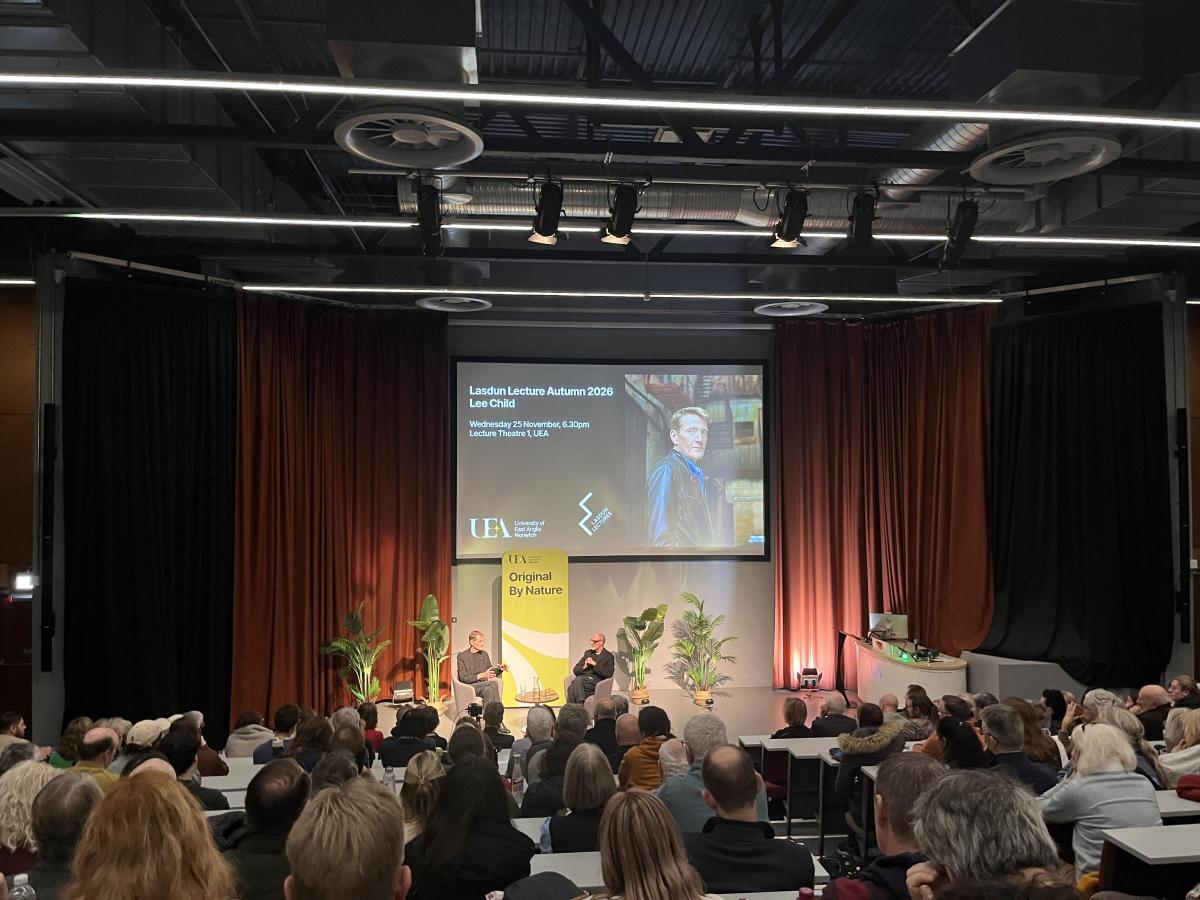
The creator of the Jack Reacher series spoke to a packed audience at UEA's annual Lasdun Lecture on November 25, reflecting on a life shaped by books and explaining why access to reading remains important both inside and outside the classroom.
READ MORE: All roads lead to reading: Roman storyteller Simon Scarrow on the power of books
Lee said reading had been a constant throughout his life, recalling how visits to the library as a child helped form the habits that would eventually lead him towards a writing career.
"All my life, I've been a reader," he said. "Reading all the time. Literally six books a week."

The author told the audience that reading occupies a unique place among forms of storytelling because it requires active participation from the reader.
"What the writer does is make strange black marks on white paper that, in and of themselves, mean nothing," he said.
"Then it can be years later, even centuries later, a reader picks them up, scans their eye over the black marks, and the story appears in the reader's head, which means that the reader is the one doing the work."
Lee argued that the process helps develop thinking and understanding because readers must actively engage with what is on the page.
"Literally, the reader's mental energy is being burned, the reader's calories are being burned. The story is at that point created by the reader, so the reading is interrogative process.
"You have to actively engage with a coded text, and you establish the meaning for yourself."
READ MORE: New horror book festival draws readers from across the UK and beyond to Norwich
His comments come as he supports one of the largest prison reading initiatives ever undertaken in the UK.
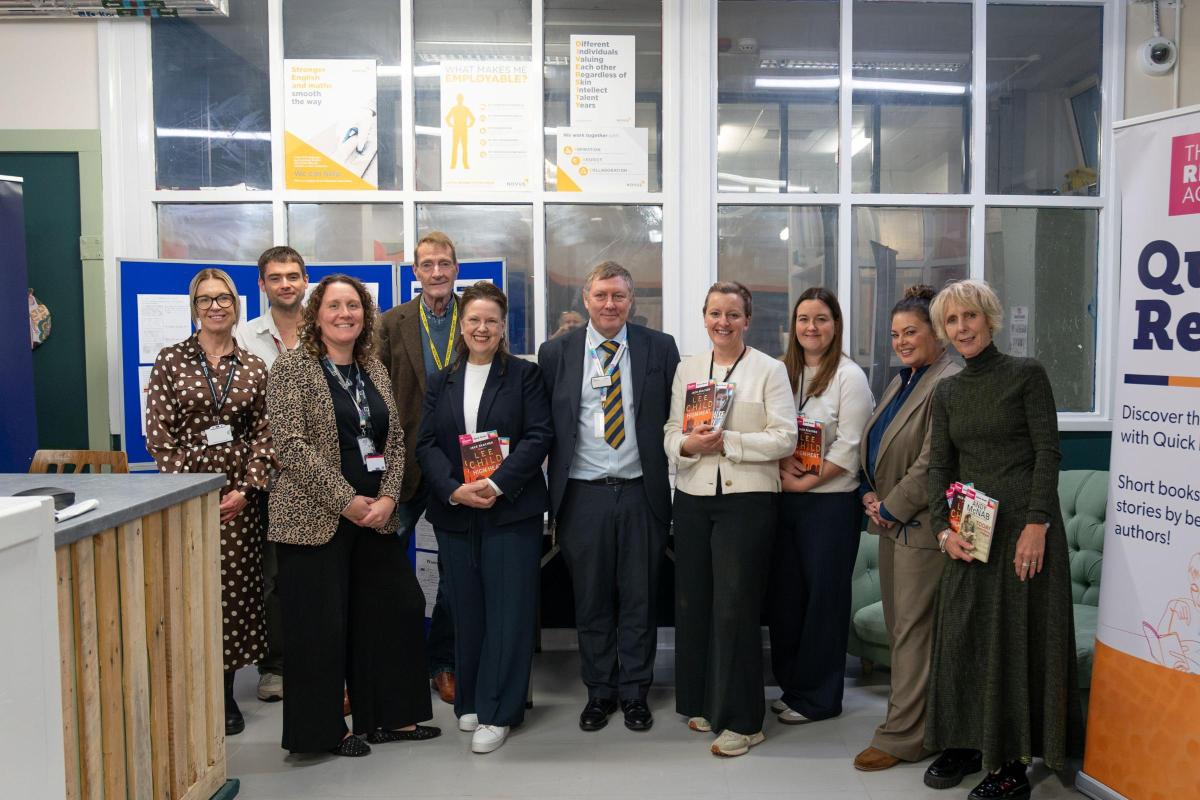
The programme, delivered by The Reading Agency as part of the National Year of Reading 2026, will see nearly 500,000 Quick Reads books distributed across prisons in England, Wales, Scotland and Northern Ireland.

The collection includes crime fiction, memoir, wellbeing titles and creative writing, with contributions from authors including A. A. Dhand, Dreda Say Mitchell, Andy McNab, Lemn Sissay, Cathy Rentzenbrink and Lee himself.
During the question-and-answer session in Norwich, Lee expanded on why he became involved with prison reading.
He said concerns about reoffending and the challenges many prisoners face on release first sparked discussions about how literacy could help improve outcomes.
"We figured that there's a huge problem with the revolving door with prisons," he said.
"If we could teach them to read or increase their literacy skills, then they get a better job.
"Maybe they can read a lease, so they can rent a flat, so they can just function that little bit better."
While acknowledging that prison is the right place for many offenders, Lee said better literacy could help those who have become trapped in the system through poor educational outcomes or difficult circumstances.
"If those people, those marginal people, could be helped, then the revolving door slows down a little bit," he said.
"That is the thing about readers. Readers are the most thoughtful and civilised among us – because they're readers."
READ MORE: Video tour of UEA's British Archive for Contemporary Writing
The lecture also offered an insight into Lee's long-standing relationship with UEA, where his literary archive is held and where he has supported the development of crime-writing education.
He praised the university's approach to balancing academic study with practical skills and said that was one of the reasons he continues to support its writing programmes.
"That is why I support UEA," he said. "I think it is the modern-day paradigm of what education should be: absolutely respectful of the academic stature of education but, at the same time, completely in the real world."

This article has been published as part of Born & Read in Norfolk – a year-long initiative highlighting the importance of reading and writing, delivered in partnership with the National Centre for Writing, headline sponsor RWE and sponsor YouGarden.
Follow the campaign throughout the year in our coverage and on social media using #BornAndRead2026 or get in touch at readingmatters@newsquest.co.uk


Share